

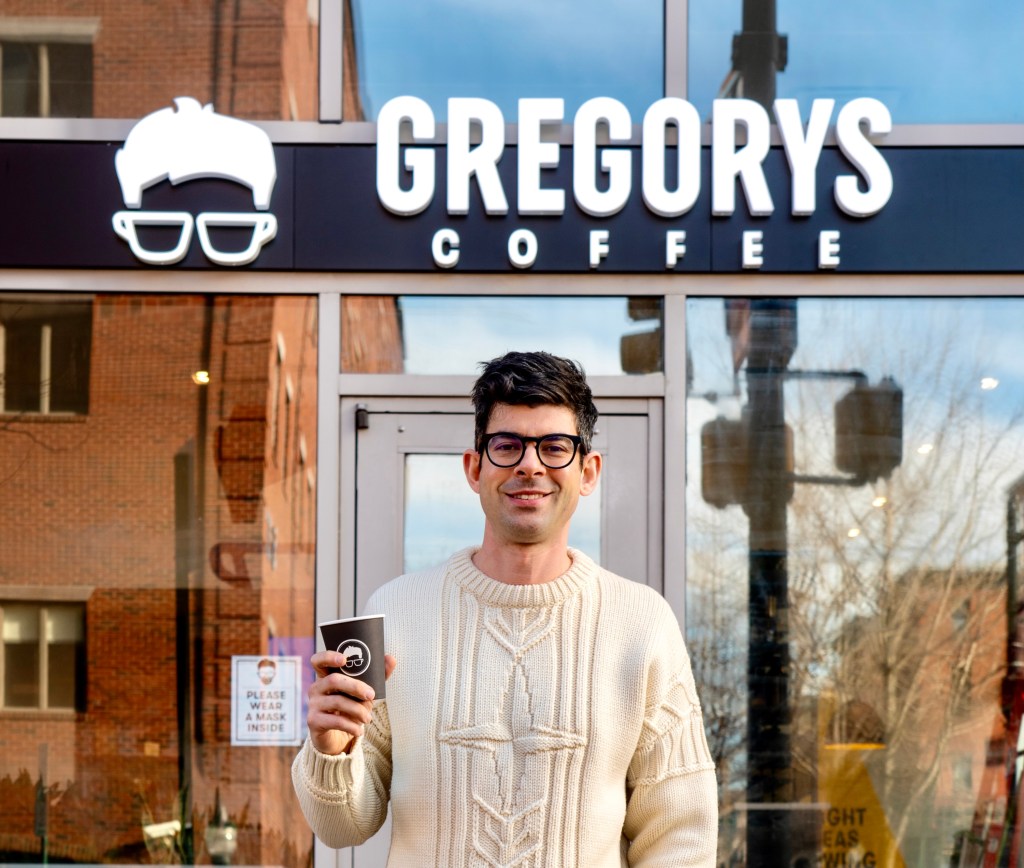
Key Takeaways
- Gregorys Espresso has grown from one small Park Avenue bar in 2006 to 53 places nationwide, with typical shops now doing over $1 million in annual gross sales.
- Income reached about $40 million final 12 months and is projected to hit roughly $45 million this 12 months.
- Gregorys Espresso founder and CEO Gregory Zamfotis attributes the expansion to high quality espresso, roasted in-house.
Twenty years in the past, Gregory Zamfotis was at a crossroads. He was a second-year regulation pupil at Brooklyn Legislation Faculty and had simply been supplied a full-time place at an actual property regulation agency. The one downside was that Zamfotis wished to open his personal enterprise.
“I grew up within the meals enterprise,” he explains in a brand new interview with Entrepreneur. “My father operated a lot of ideas in New York Metropolis, so I grew up working with him.”
Zamfotis labored at his father’s sandwich store throughout his time in regulation college. By the top of his schooling, he was successfully operating the place. He wound up “actually having fun with” the work and contemplating it as a possible profession. He knew he wished to begin a enterprise of his personal in the future, separate from his father’s endeavors. So after graduating from regulation college, he took his curiosity and keenness for espresso and his expertise working in meals service, and determined to open his personal espresso store. He was 24 years outdated.
“For those who have been within the Midtown Monetary District, the areas the place the vast majority of New Yorkers are spending their time working, the one choices for espresso actually have been Starbucks or Dunkin,” Zamfotis says. “I assumed that was an enormous alternative as a result of I grew up working there. I wished to take what I had realized, apply it to the espresso business, and do it in part of the town that was extraordinarily underserved on the time.”
Zamfotis began by opening one espresso bar on Park Avenue and determined it could merely be higher than something round it. The plan was to obsess over the drinks, the components and the texture of the place till it earned a everlasting slot in New Yorkers’ day by day routines.
Day after day, cup after cup, that little store changed into a magnet for regulars who didn’t identical to the espresso; they have been loyal to the model. The id sharpened round daring, playful branding and a menu that refused to chop corners.
“We wished to do a top quality specialty espresso operation in a quantity setting,” Zamfotis says, describing early days when he put in “70 to 80 hours per week” on the retailer to ensure it ran precisely as he envisioned.
What shocked him
What Zamfotis didn’t totally perceive on the time was how laborious it could be to do espresso exceptionally nicely at scale. “I suppose I used to be shocked at simply how advanced doing espresso rather well was,” he says. “The one method we have been gonna win is that if we might differentiate ourselves from the nationwide gamers or the opposite individuals doing espresso across the block.”
That realization pushed him right into a type of self-imposed espresso bootcamp. He visited retailers, attended conferences and immersed himself within the craft. “I had to spend so much of time and power not solely visiting different espresso retailers, touring, going to conferences, listening to audio system, and simply pouring myself actually into all issues espresso, to make myself an knowledgeable,” he says.
That work modified the tradition and the product. “There’s a distinction between doing issues nicely and doing issues nice,” he explains. As he elevated the espresso program and coaching requirements, clients started noticing the distinction — and saved their day by day behavior. “Prospects, perhaps to start with, have been coming due to all the opposite issues…nice service, quick, handsome retailer…then as soon as I began to raise the espresso program greater and better, whereas additionally holding all these different components so robust, that’s once we actually began to make issues higher,” he says.
Right this moment, Gregorys roasts its personal beans in Lengthy Island Metropolis, bakes recent pastries and emphasizes personalization — from milk selections to syrup ranges — whereas nonetheless transferring quick. The purpose, Zamfotis says, is that clients ought to really feel like they’re sacrificing nothing: not time, not high quality, not choices.
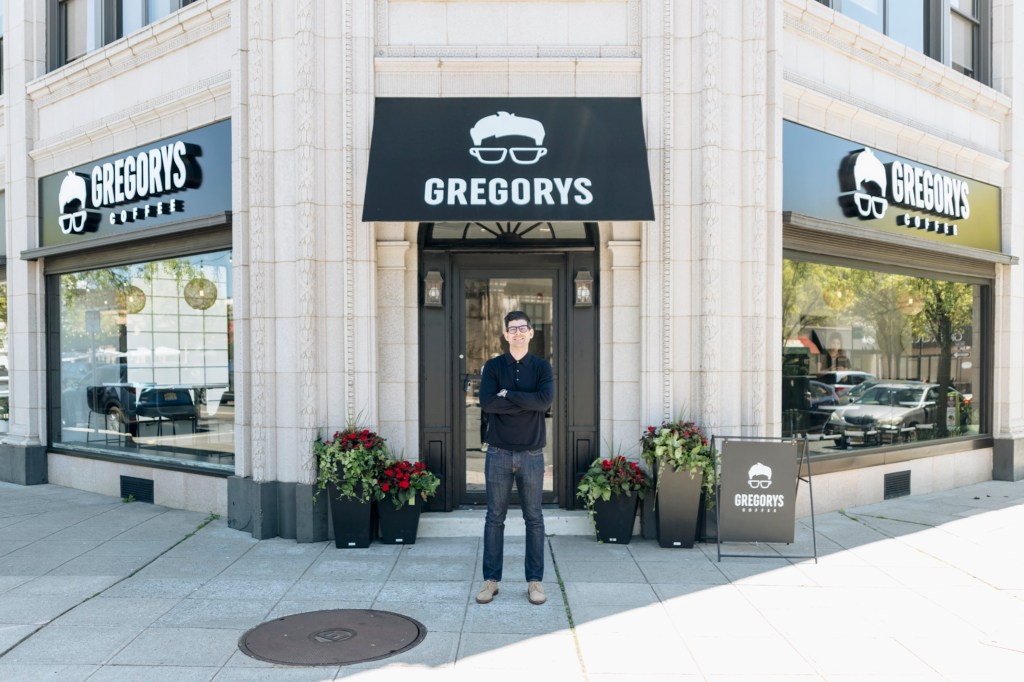
Scaling from one retailer to 53 — and to $45 million
Zamfotis estimates the primary store took 12 to 18 months to seek out consistency; the corporate hit the $1 million annual gross sales mark round 12 months two or three. That traction gave him the boldness to open a second location roughly two and a half years after the primary — and it was an prompt hit.
“When the primary location could have taken 12 to 18 months to stabilize, the second location was steady from the get-go…very busy from the day we opened,” he says.
From there, development turned a perform of programs and folks. “I’ve at all times stated you may solely develop as quick because the individuals [you have] to assist execute,” Zamfotis says. For about 12 years, each single individual ready of authority at Gregorys was promoted from inside, usually beginning as baristas.
That philosophy helped the corporate develop from two shops to 53 throughout New York, New Jersey, Washington, D.C., Florida, California, Arizona and Tennessee. The financials now mirror that footprint. “Final 12 months we did simply round $40 million,” Zamfotis says. “This 12 months, I consider the projection is nearer to love $45 million.”
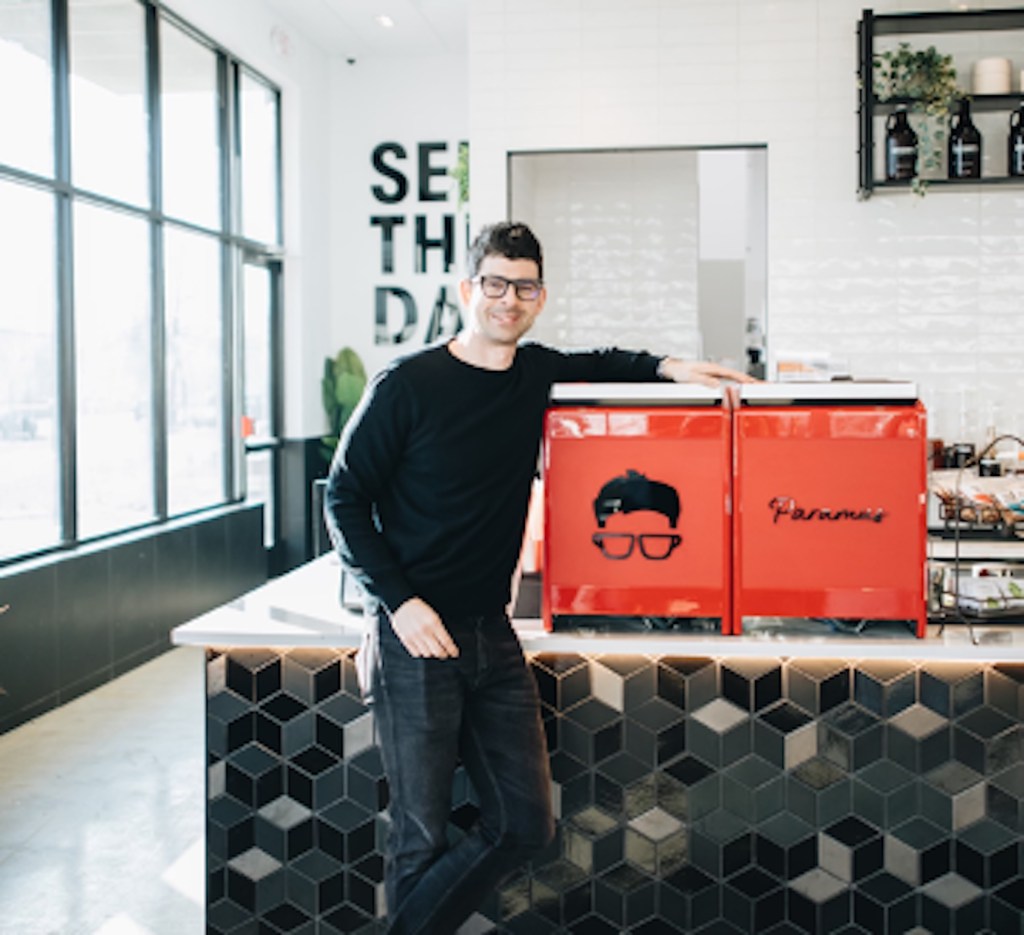
Exploring franchising
In some unspecified time in the future, Gregorys hit a crossroads: preserve grinding out company shops one after the other, or admit that the “unimaginable field” they’d constructed was robust sufficient to share with different operators and scale quicker than a single workforce ever might. That’s when Craveworthy Manufacturers and its CEO Gregg Majewski stepped in as managing associate and company operator in August 2025, bringing a platform constructed for franchising, from coaching to shared providers that might help a nationwide push.
“We knew that if we wished to proceed to develop the model on the pace that was vital, the one method was to connect to franchising,” Majewski tells Entrepreneur in a brand new interview.
Now, with a 20-year monitor document and a typical retailer pulling in roughly $1 million in annual income (with excessive performers round $1.6 million and drive-thru fashions at about $1.4 million), Gregorys is now not simply the underdog Park Avenue café. It’s a New York–solid espresso model entering into the franchise highlight, aiming to promote 50 to 75 places in its first 12 months of franchising this 12 months and welcoming operators to go toe-to-toe with the most important espresso gamers in America.
“Any model that’s been across the business so long as that and has been profitable in as many markets because it has over the 20-year timeframe is ideal for franchising — particularly while you constructed your status in one of many hardest cities on the earth to function in, New York,” Majewski says. Gregorys has “a gaggle of regulars that completely dwell and die [for] this model,” Majewski explains.
Craveworthy Manufacturers brings scale muscle to franchising ambition. The agency has 21 manufacturers in its portfolio, eight of that are already franchising, and it offers the infrastructure that early franchisees usually lack: coaching, shared providers, development help and operational programs constructed to copy efficiency throughout shops. Craveworthy’s portfolio consists of manufacturers like Large Hen, Taffer’s Tavern and Genghis Grill.
For would-be franchisees, Gregorys is now pitching itself as a method right into a coveted section that may in any other case be laborious to entry. Majewski notes that “among the greater gamers are offered out or aren’t accepting.” Gregorys gives a build-out price “wherever from $200,000 to $700,000,” he says.
Why franchising works
Majewski is obvious about why he believes franchising works, not only for Gregorys however throughout Craveworthy’s portfolio. On the franchisor aspect, the hurdle is making certain programs and procedures are in place so the corporate can prepare successfully and execute the product persistently.
On the franchisee aspect, the problem is extra psychological: “following the programs and procedures and reminding your self that you simply purchased right into a system,” he says. The promise is that if the system is nicely designed and correctly adopted, it exists “for a cause so that you could be profitable.”
Majewski insists that tradition is the differentiator in a profitable franchise. He says success comes from “establishing an unimaginable tradition within the system” and ensuring operations are easy sufficient to copy. “If any idea is ever too sophisticated, you may’t have the consistency,” he explains.
The purpose is that “while you stroll right into a retailer in Indiana or a retailer in California, you get the identical expertise,” he says. For Gregorys, meaning defending not solely the espresso high quality and menu but additionally the texture of a model born on Park Avenue and refined in New York Metropolis’s day by day grind.
Key Takeaways
- Gregorys Espresso has grown from one small Park Avenue bar in 2006 to 53 places nationwide, with typical shops now doing over $1 million in annual gross sales.
- Income reached about $40 million final 12 months and is projected to hit roughly $45 million this 12 months.
- Gregorys Espresso founder and CEO Gregory Zamfotis attributes the expansion to high quality espresso, roasted in-house.
Twenty years in the past, Gregory Zamfotis was at a crossroads. He was a second-year regulation pupil at Brooklyn Legislation Faculty and had simply been supplied a full-time place at an actual property regulation agency. The one downside was that Zamfotis wished to open his personal enterprise.
“I grew up within the meals enterprise,” he explains in a brand new interview with Entrepreneur. “My father operated a lot of ideas in New York Metropolis, so I grew up working with him.”
Zamfotis labored at his father’s sandwich store throughout his time in regulation college. By the top of his schooling, he was successfully operating the place. He wound up “actually having fun with” the work and contemplating it as a possible profession. He knew he wished to begin a enterprise of his personal in the future, separate from his father’s endeavors. So after graduating from regulation college, he took his curiosity and keenness for espresso and his expertise working in meals service, and determined to open his personal espresso store. He was 24 years outdated.

