

Western European on-line sellers increasing into Central and Japanese Europe usually underestimate how completely different buyer expectations are within the area. In line with achievement supplier isklad, cost preferences, supply expectations and checkout necessities differ considerably from requirements in Western Europe.
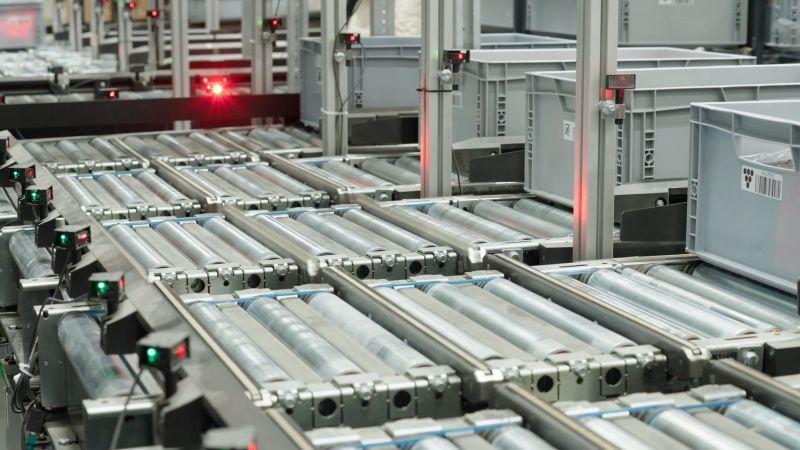
Isklad is a completely automated achievement supplier from Slovakia, primarily based close to Bratislava. It has a hub of 23,000 sq. meters, the place it fulfills orders for over 150 on-line shops. Presently it reaches clients throughout Slovakia, the Czech Republic, Hungary, Poland, Austria, Germany, Romania and different worldwide markets.
‘Each market has different wants’
The corporate sees that many on-line sellers from Western Europe, getting into Central Europe, usually make this step with the improper assumptions. “Western manufacturers usually enter the CEE market assuming that, like of their house markets, checkout will present card-first conduct. However it doesn’t”, says Martin Mitošinka, CEO and founding father of isklad.
In Greece and Romania, for instance, cash-on-delivery (COD) is a very fashionable cost technique for on-line orders. In these nations, over 80 p.c of on-line shops supply COD funds. On the similar time, BLIK is the most well-liked cost technique in Poland. In line with analysis in 2024, it has a market share of 74 p.c within the nation. If sellers do not need it built-in of their on-line retailer, they may miss out on conversion.
‘Providing most well-liked native carriers can strongly have an effect on conversion in Poland, Slovakia and the Czech Republic’
There are different preferences that sellers additionally have to take note of. In line with isklad, providing most well-liked native carriers can strongly have an effect on conversion in Poland, the Czech Republic and Slovakia. And in Romania, supply firms rely closely on the ‘county’ discipline, moderately than ZIP codes. Ideally, retailers ought to implement handle verification throughout the checkout and handle varieties; in any other case, undelivered returns can improve dramatically.
Localizing comes with its personal challenges
However implementing these native preferences comes with its personal challenges. These usually are not solely felt by on-line shops, but additionally by logistics companions. For instance, including cash-on-delivery (COD) can create operational complexity for suppliers unfamiliar with COD-heavy markets. In line with isklad, which helps multi-currency COD funds in 17 nations, it usually introduces a extra advanced returns administration, money reconciliation with carriers, and float administration.
‘A slower delivery-speed can negatively impression conversion’
One other problem for on-line sellers is delivery-speed expectations of shoppers in Central and Japanese Europe, created by on-line marketplaces. Allegro, which is a market chief in Poland, had 4.2 million clients within the area in 2025. This platform, in addition to eMAG, has made customers get used to next-day or 48-hour supply. And Czech on-line market Alza even provides next-morning supply to its personal parcel machines (if ordered earlier than midnight). For patrons, it is a commonplace, not a premium service. “Transport with 3 to 5-day supply can negatively impression conversion charges within the very markets on-line shops try to develop”, says Mitošinka.

