

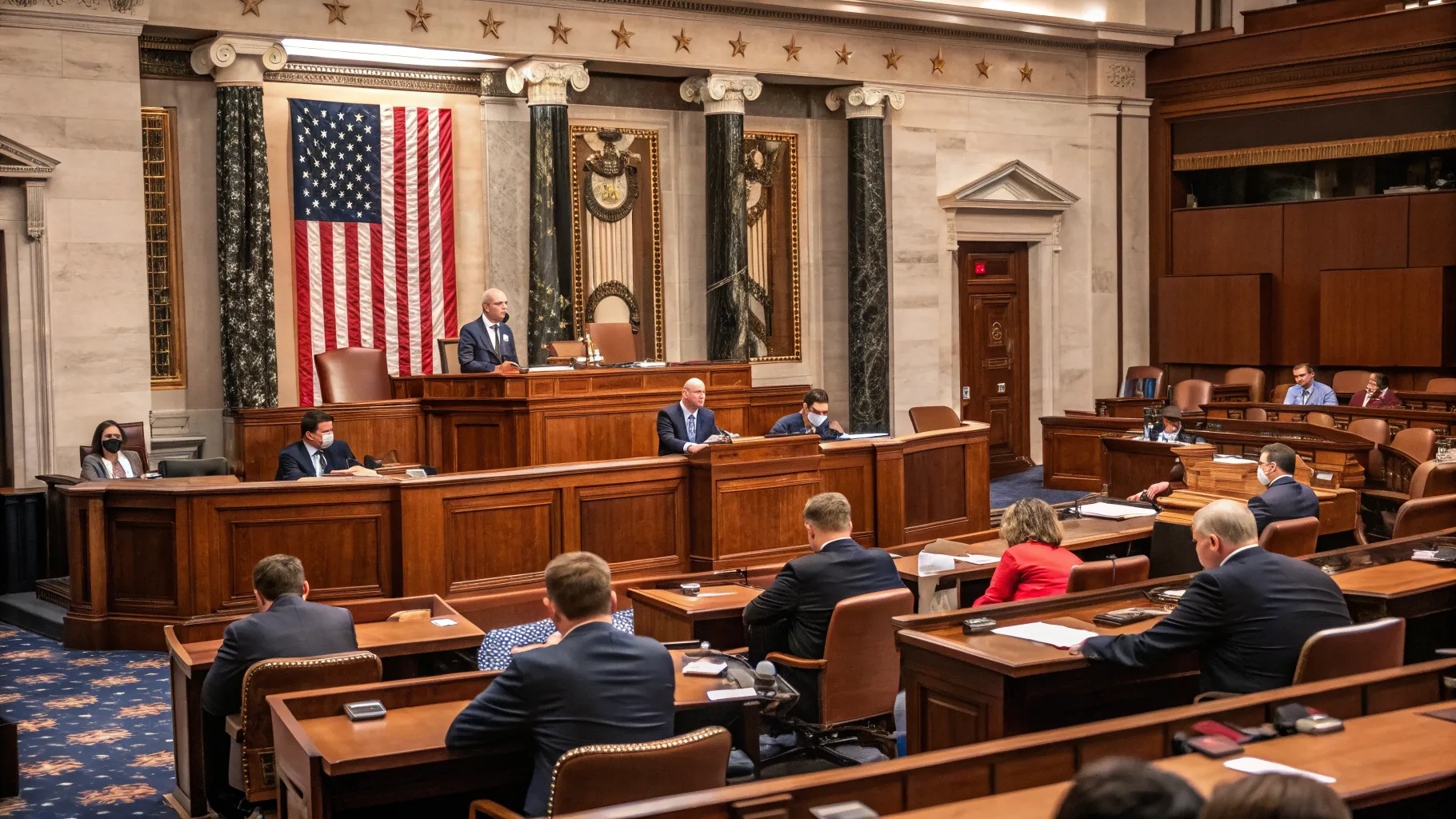
Lawmakers are once more debating the cap on state and native tax deductions, a flashpoint because it took impact in 2018 and altered tax payments for hundreds of thousands in high-tax states.
The rule, a part of the 2017 tax legislation, limits how a lot filers can deduct for state and native revenue and property taxes. It impacts returns filed throughout the nation, nevertheless it hits hardest in locations with excessive levies and residential costs. The cap expires after 2025, establishing a significant determination in Washington subsequent 12 months.
What the Deduction Appeared Like Earlier than 2018
For many years, taxpayers who itemized might subtract state and native taxes from federal revenue. There was no greenback cap, although greater earners usually confronted phaseouts underneath different guidelines. That modified with the Tax Cuts and Jobs Act.
“Earlier than 2018, the tax break — together with state and native revenue and property taxes — was limitless for filers who itemized deductions.”
On the identical time, the usual deduction nearly doubled in 2018, to $12,000 for single filers and $24,000 for married {couples}. Since then, inflation changes have raised these quantities. In 2024, the usual deduction is $14,600 for single filers and $29,200 for married {couples} submitting collectively.
What Modified Underneath the SALT Cap
The legislation set a $10,000 restrict on the entire deduction for state and native revenue, gross sales, and property taxes. The cap applies per return for many filers. Married {couples} submitting individually can every declare as much as $5,000.
The change diminished the quantity of people that itemize. Many households now discover the usual deduction bigger than their itemized totals. For householders in high-tax areas, the cap usually means greater federal taxable revenue.
Who Feels the Affect
The cap is most felt in states with greater revenue taxes and steep property payments, equivalent to New York, New Jersey, California, and Connecticut. Owners with sizable mortgages and native levies see fewer deductions. Center- and upper-middle-income households in these areas can face greater federal taxes than earlier than 2018, even when their revenue didn’t surge.
Opponents argue the cap penalizes states that spend extra on colleges and infrastructure. Supporters say it stops the federal tax code from subsidizing greater native taxes and helps fund different price cuts.
State Workarounds and IRS Steerage
After the cap took impact, some states created choices to ease the burden on small enterprise house owners. Many adopted move‑by entity taxes that shift state revenue taxes from people to companies, which might nonetheless deduct them on the federal stage.
The IRS later issued guidelines to dam sure early workarounds that attempted to reclassify tax funds as charitable presents. However the move‑by strategy stays widespread, and greater than half of states now provide it in some kind.
Latest Efforts to Change the Cap
Congress has floated a number of tweaks. Proposals have included elevating the cap for married {couples}, tying reduction to revenue ranges, or ending the restrict early. A Home effort in early 2024 to boost the cap for some filers didn’t advance. With most particular person tax provisions set to run out after 2025, the subsequent Congress will face a broad determination: lengthen, modify, or finish the cap together with different elements of the 2017 legislation.
What Owners and Filers Can Do Now
Tax outcomes range broadly. Filers ought to assessment whether or not itemizing nonetheless beats taking the usual deduction and contemplate timing methods for deductible bills.
- Evaluate your itemized totals to the usual deduction every year.
- Verify in case your state gives a move‑by entity tax and whether or not it matches your online business.
- Observe property tax assessments and enchantment if they appear excessive.
- Mannequin eventualities for 2026, when present guidelines could change.
What to Watch Subsequent
The talk will sharpen because the 2025 deadline nears. Excessive-tax states will press for greater caps or a full repeal. Others could favor maintaining the restrict to assist pay for price cuts or deficit objectives. Any change will doubtless be half of a bigger tax package deal that revisits charges, youngster credit, and the usual deduction.
The choice will form homeownership prices, state budgets, and take‑house pay for years. For now, the $10,000 cap stays in place, and cautious planning can nonetheless make a distinction on April 15.

